
Most people spend their lives chasing external signals: a title, a salary, recognition from the right people, and arrive somewhere in their forties or fifties with a nagging sense that the life they built isn't quite theirs. Florian Kemmerich had that reckoning at 33. And instead of ignoring it, he did something most people don't: he stopped, went inward, and built the rest of his career around what he found there. The through-line from Black Forest village to Olympic judo to impact investing to Vocating AI is not random. It is the same leitmotif, expressed in different forms: impact lives and share profits. He joined the Start to Scale Podcast to share the full arc.
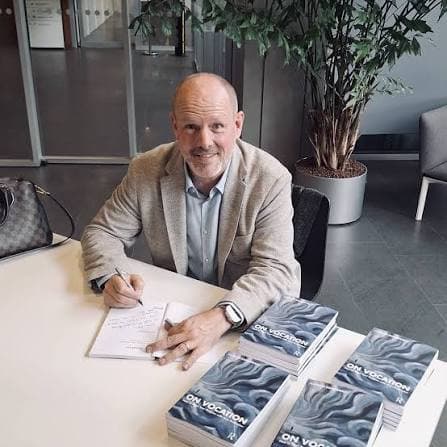
Florian Kemmerich, multi-time founder, impact investor, author of On Vocation, and founder of Vocating AI
Florian Kemmerich is a German-born, Geneva-based multi-time founder, impact investor, and author of On Vocation: How to Align Purpose with Your Profession. He competed on Germany's national judo team, spent 15 years in healthcare corporate leadership, invested in 100+ companies across 30+ countries, and founded Vocating AI: an agentic platform helping people find their vocation before an algorithm does it for them. His leitmotif: impact lives and share profits.
Black Forest to Five Languages: Growing Up at the Edge of Worlds
Florian Kemmerich grew up in the Black Forest in southern Germany, just on the Swiss border. His father was a doctor, his mother a teacher, academic family in a farming village. When his family moved there when he was five, he couldn't fully understand the local dialect. "I was a little bit of an outsider. I wasn't necessarily accepted." That early experience of being on the edge of a culture (close enough to see it clearly, far enough to feel its distance) became one of the formative conditions of his life.
Today he speaks five to six languages: German, English, Spanish, French, Italian, and more. Only English was formally taught. The rest were acquired the way he recommends learning anything: through exposure. Time in those countries, relationships with people who spoke them, a refusal to retreat into English when another language was possible. He lives in Geneva. His wife and five children hold both German and Mexican passports. At home, they speak Mexican Spanish.
The Swiss Parliament, he points out, is a model of what cosmopolitan communication looks like at its most functional: every member speaks their own language, there is no translation, and everyone understands each other. "It's pretty amazing." Not a perfect analogy for global culture, but a useful one for what becomes possible when people commit to understanding across difference rather than defaulting to a lingua franca.
"I love languages. Whenever I had a chance to speak another language, I would jump on it. It's not just the language: it's understanding other cultures. You don't want to have a narrow view of just your country, your nationality, your community."
Judo, the Bundesliga, and the Olympic Path He Chose Not to Take
At five, after being bullied in the village, Florian's parents put him in judo, specifically to toughen him up and give him the ability to defend himself. He stayed for fifteen years. By secondary school, he was good enough to attend a German sports school that required being in the top five nationally to apply. Mornings were classes, afternoons were training, weekends were tournaments. He competed in the Bundesliga and made the national team.
After finishing high school, he did his mandatory military service with the parachutists, and was on track to join the sports company within the military to prepare for the 1992 Barcelona Olympics. His national trainer had planned the path. But outside the routine, away from the structure that had governed his life for over a decade, he made a different decision.
He didn't see a professional future in judo beyond competition. He didn't want to become a coach, and couldn't picture staying. So he stepped off. He finished his military service, ended his judo career, and moved on.
What judo left behind wasn't the medals. It was the psychology. Judo (the "soft way") is built on a counterintuitive principle: use the opponent's inertia against them. Control, not destruction. And above all, emotional regulation. "If I get angry, I lose. The one who gets angry loses immediately because it's milliseconds. One wrong move, and it's done. So I really learned psychology. I learned to go out of my comfort zone, but also very much to contain respect and make sure you are psychologically always on top, even though you might be nervous, you wouldn't show this."
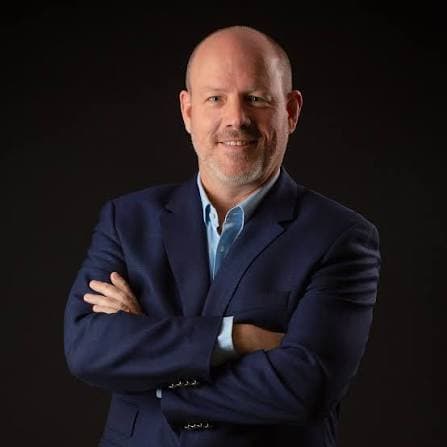
Florian Kemmerich: the thread connecting judo, impact investing, and Vocating AI is the same: impact lives and share profits
Fifteen Years in Healthcare, and the Coaching Session That Broke Everything Open
After judo and a brief detour toward dramatic arts school (his father talked him out of it ("too many artists not making money")), Florian studied marketing and business administration, entered a healthcare corporation as a good Gen Xer, and stayed for fifteen years. He worked his way up. By 33, he was running a company, had a home and a family, and had achieved everything his parents' definition of success required.
Then his boss offered him a coaching session. He sat down with a psychologist, went inward, and discovered something he hadn't been taught to look for: the difference between his inner child, inner adult, and inner parent, and the realization that he had been, as he now puts it, "the absent subject of my own education." His education had given him every tool to make a living. It had told him nothing about himself.
"Am I living my life, or just a life? My education gave me all the tools to make a living but didn't tell me anything about myself. I only had external references. I didn't have an internal one."
He started doing personal development methodologies, tried to bring them into the corporation, found the friction too great, and eventually made the decision most people only fantasize about: he left. He gave up what he calls his "golden handcuffs" and entered what he describes as his "roller coaster life": startups, turnarounds, soul-searching. Not because he had a plan, but because the alternative was continuing to optimize a life that wasn't quite his.
Impact Investing: 100+ Companies, 30+ Countries, Capital as a Force for Good
The pivot from healthcare executive to impact investor wasn't accidental; healthcare access is itself an impact investing domain, and the sector connection gave him a way in. He joined an asset manager on the riskier side of the market, worked through turnarounds, and over time invested in more than a hundred companies across more than thirty countries, mostly in rural areas of Africa, Asia, and Latin America.
What drew him wasn't just the financial mechanics. It was the intentionality: the ability to deploy capital not just toward return but toward a specific outcome. And the additionality: the question of how to make money flow where it wouldn't normally go. "It's not just investment, but also the meaning of the investment: the intentionality, what you resolve for with an investment."
People started coming to him. Accomplished professionals in their forties and fifties who had the success, but wanted the meaning. Midlife crisis, broadly defined: one version going sideways (buying a sports car, chasing youth), the other asking something more serious: "What can I do that will make my life meaningful?" He began working with them informally. Over ten years, more than two hundred people. Not as a job, as a side conversation. Can you talk to my daughter? Can you talk to my son?

On Vocation: How to Align Purpose with Your Profession, Florian Kemmerich's seven-step methodology, built from 200+ conversations over a decade
On Vocation: The Book That Emerged from 200 Conversations
The pattern that emerged from those two hundred conversations, across a decade, across industries and countries, was consistent enough that Florian eventually wrote it down. The result was On Vocation: How to Align Purpose with Your Profession: a seven-step methodology for going inward, identifying your vocation, and then building a professional life anchored to it.
The word "vocating" is his own. To vocate means to actively dedicate yourself professionally to your vocation. Not just to know what you want, but to live it through your work. He distinguishes this sharply from the standard career-building logic: identify a growing market, find a paying role, build skills, climb. That path, he argues, produces people who are competent but unfulfilled, running on what he calls "external references," always measuring themselves against what others think is good.
A second book, On Vocation in Organizations, is due in November and extends the methodology beyond the individual: once you vocate as a person, how do you bring that into the companies you build or join? His argument is that when organizations align around genuine vocation rather than extracted performance, intrinsic motivation rises, ego falls, empathy increases, and the numbers follow. "There's a massive improvement in profitability because intrinsic motivation goes up, egos go down, empathy goes up, and the net promoter score goes through the roof."
Why Florian Built Vocating AI, and Why It Refuses to Give You Answers
Last year, Florian completed a management buyout of a consulting firm in the impact investing space. He and the team flipped it to AI, restructuring around agentic tools, eliminating the junior roles that AI could now perform. Seventy percent of the headcount went. And as he watched it happen, he looked at his five children and felt something sharpen.
White-collar jobs were being wiped out. Entry-level positions were disappearing. Kids emerging from university were unable to find footholds. And if they didn't know what they wanted, they would ask ChatGPT or Claude, and an algorithm would decide the direction of their lives. "AI will always please you. It will say the best things, whether it's good for you or not. AI doesn't care."

Florian Kemmerich, building Vocating AI to protect human agency in an era when algorithms are happy to make your decisions for you
His response was Vocating AI: an agentic AI platform built on the methodology of his book, gamified in the style of Duolingo, where users talk to an avatar that asks questions rather than provides answers. The distinction is everything. The platform is trained not to tell you what to do. It is trained to reflect. Every agent is contextualized on science: psychology, personality, purpose, with guardrails specifically designed to ensure the user arrives at their own conclusions. "The answer lies in you, not in the machine."
The platform has been tested with students from more than twenty universities across more than twenty countries. Florian's team published a white paper on the results. The learning component is free (intentionally so). There will be a paid execution layer, but it will cost "peanuts" by design. "You will only pay something if it leads you to economic value."
"AI is a tool, not a crutch. It's a little bit like the Matrix movie, which pill do you take? It's your choice. I want to make sure that human agency is not about AI. It's about your agency to do what you want to do."
His goal for Vocating AI is specific: 54 million people vocating within three to five years, between the ages of 18 and 28. That number (3.4% of the world population in that age range) is not arbitrary. It is, he says, a scientific tipping point. The threshold past which something shifts from personal change to collective change.
The Creator Economy and What It Means for Founders Right Now
The knowledge economy is ending. For decades, economic value was tied to accumulated knowledge: you studied, you entered at the bottom, you learned, and your value grew as your knowledge compounded. That model is broken, not because knowledge stopped mattering, but because AI can now access and deploy it instantly and cheaply.
What replaces it is what Florian calls the creator economy: value is no longer in what you know but in what you do with it. Creation, application, synthesis. This has two consequences for founders and early-career professionals. First, linear careers are disappearing in favor of iterative ones. Second, knowing what you want (your North Star) has never mattered more, because the external signals that used to guide people (stable job, predictable ladder, institutional prestige) are no longer reliable guides.
"Today, one percent of the population are entrepreneurs. This will be over twenty percent." Not because entrepreneurship will suddenly become glamorous, but because AI has lowered the cost of building something to almost zero. The person who previously needed a team, capital, and years of runway to test an idea can now test it alone in days. The question is whether they know what they're actually building toward, or whether they're chasing the closest carrot.
As an impact investor, Florian sees this as a genuine silver lining. More people building things means more people contributing to the world rather than extracting from it. "Whether this is global health, whether it's the economy itself, as impact investors, we see more and more people doing things where they contribute. That's beautiful. That's what we need."
Intuition Over Fantasy: The One Thing He'd Tell Every Founder
The thread that Florian traces through his own life, from a bullied boy in a Black Forest village to judo national team to healthcare executive to impact investor to author to AI founder, is not one of strategic planning. It is one of recurring realizations about what actually mattered, followed by the courage to act on them.
The earliest imprint, he says, is the key. The thing you most disliked as a child, not necessarily a trauma, but a clear "not this" that contains, when flipped, the seed of your meaning. For him, being the outsider who didn't belong became the driver to create belonging for others. In healthcare, in capital markets, in the communities of accomplished people who came to him asking "what do I do with my life?": the expression changed. The motivation didn't.
"Do things based on your intuition, not on your fantasy. Don't focus on fame, fortune, and power. Stay on the course of what is meaningful, what is right, and how you can make a difference, based on your intuition. Because rarely does intuition fail. If you chase fame, fortune, and power, your success will be seen by others, not by yourself."
That is not advice against ambition. It is advice against mistaking someone else's definition of ambition for your own. Florian has raised capital, built and sold companies, invested across thirty countries, trained with Olympic-level athletes, and now runs an AI platform targeting fifty-four million people. None of it was planned as a sequence. All of it followed the same thread.
Frequently Asked Questions
Who is Florian Kemmerich?
Florian Kemmerich is a German-born, Geneva-based multi-time founder, impact investor, and author of On Vocation: How to Align Purpose with Your Profession. He spent 15 years in healthcare corporate leadership before a coaching session at 33 led him to leave the corporate world and pursue entrepreneurship, impact investing, and personal development. He has invested in over 100 companies across more than 30 countries, primarily in rural Africa, Asia, and Latin America. He also competed on Germany's national judo team and was on a path to the 1992 Barcelona Olympics before pivoting. His current venture is Vocating AI.
What is Vocating AI?
Vocating AI is an agentic AI platform that guides individuals, particularly young people between 18 and 28, through a structured journey to identify their vocation and align it with their professional lives. Unlike typical AI tools that provide answers, Vocating AI is designed to reflect questions back to the user so they arrive at their own conclusions. It is gamified in the style of Duolingo, built on the methodology in Florian's book On Vocation, and has been tested with students from more than 20 universities across 20+ countries. The learning component is free. Florian's goal is to reach 54 million people vocating in the next three to five years, which he describes as a scientific tipping point for global change.
What is Florian Kemmerich's book On Vocation about?
On Vocation: How to Align Purpose with Your Profession lays out the seven-step methodology Florian developed over a decade of working informally with 200+ people: accomplished professionals in midlife who wanted to do something meaningful but didn't know what. The book helps readers identify their earliest formative imprint, understand their inner personality structure, discover their vocation, and then build a professional path from it. A second book, On Vocation in Organizations, is due in November and extends the methodology to companies and teams.
What does Florian Kemmerich mean by 'vocating'?
Vocating is the active state of professionally dedicating yourself to your vocation, not just knowing what your purpose is, but actually living it through your work. It's the verb form of vocation: to vocate. Florian distinguishes this from the passive career paths many people follow: chasing external signals of success (fame, fortune, power) without ever going inside to understand what they actually want. His platform is named Vocating AI because the goal is to move people from passive career drift into active, self-authored professional lives.
What is Florian Kemmerich's advice for early-stage founders?
Florian's core message: do things based on your intuition, not your fantasy. Don't organize your life around fame, fortune, and power; those are external metrics built on fear, and they put your definition of success entirely in other people's hands. Instead, go inside, figure out what you want, identify your North Star, and then make decisions from that place. Intuition, he argues, rarely fails. Fantasy almost always does.
Join the Community
Founders like Florian build alongside each other at Gildre.
Gildre is a founder community for people building with intention, not just chasing the next milestone. Apply to join.
Apply to Gildre