The Science of Sales Sequences: A Data-Driven Blueprint for Outbound Success
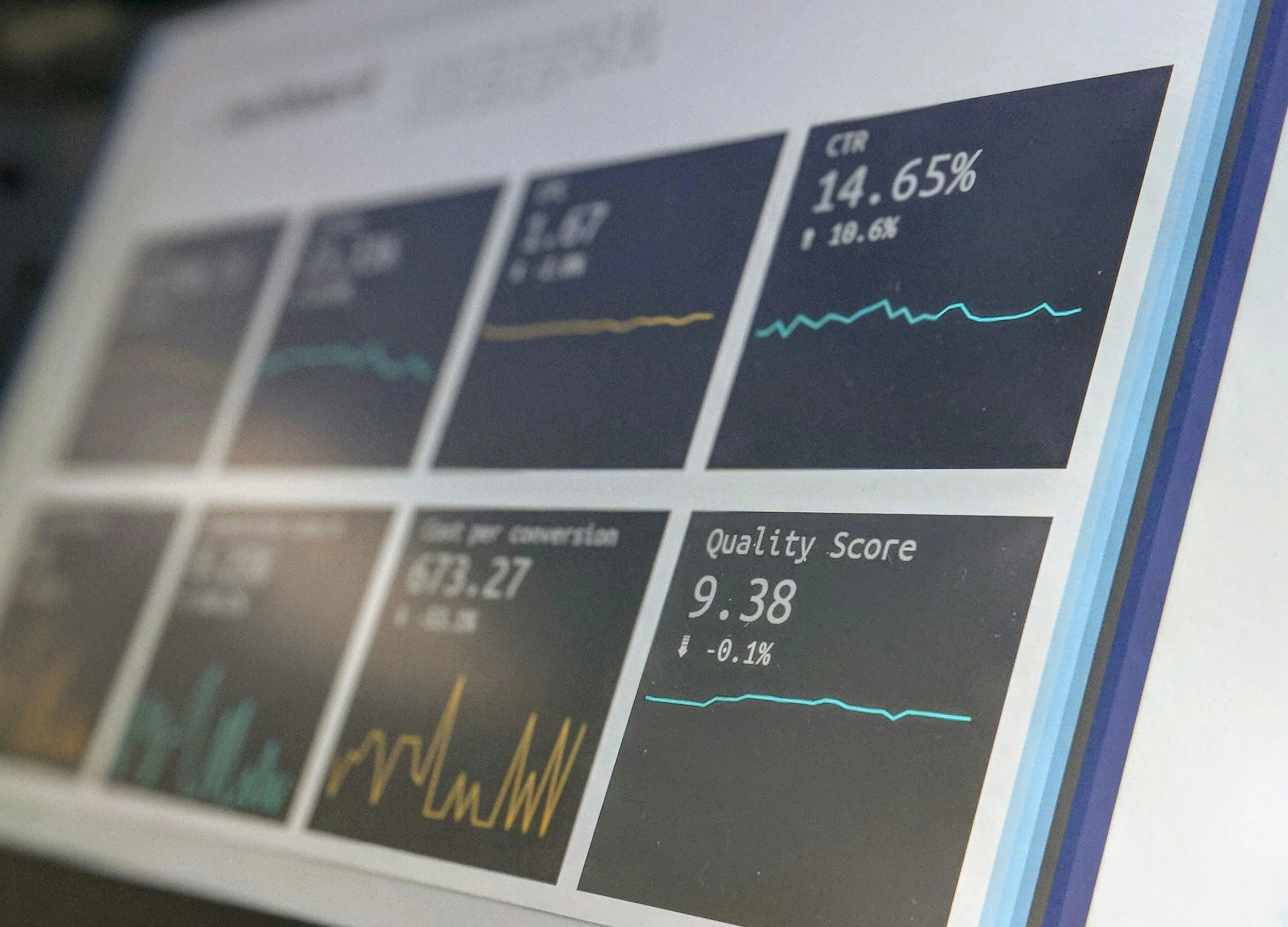
Gone are the days when sales were purely an art form. This traditional era mostly relied on “gut feelings,” experiences, anecdotes, etc. Where results were not accurately measured and of course much harder to replicate. Today, the most successful outbound campaigns are built on a foundation of data, psychology, and precision, which is why it’s super important to know which metrics you need to evaluate at every step.
Let’s dive into how modern sales teams are transforming their outreach from guesswork into science.
THE EVOLUTION OF GUT INSTINCT TO DATA SCIENCE
Remember when we used to rely solely on 'sales intuition'? The game has fundamentally changed. "'The day I stopped guessing and started measuring was the day our response rates doubled,' shares Sarah Chen", VP of Sales at TechScale. This sentiment echoes across the modern sales landscape, where top-performing teams consistently achieve 45%+ response rates by mastering the delicate dance between behavioral psychology and data analytics. That means now, you're not only part of the picture; your team also plays a significant role. Here's what they're doing differently:
BREAKING DOWN THE DATA FOUNDATION
Think of your sales sequence as a laboratory experiment. Every email opened, every response received, and every meeting booked tells a story.
Take every shot you can to sell yourself.
The key is knowing how to read these signals:
• Response Patterns: The data shows that decision-makers are 37% more likely to respond to messages that challenge their current thinking. Let’s be honest—regardless of the business world, our minds work the same way. Our attention is sparked when something isn’t obvious or expected. Add your special touch.
• Engagement Windows: Peak response times aren't just about time zones – they're about understanding your prospect's decision-making energy cycles.
• Touch Point Impact: Data reveals that there's no magic number, it varies significantly by industry and seniority level.
THE NEW SEQUENCE ARCHITECTURE
Modern sequences aren't just about staying there; they're about progression.
Here's what the data tells us:
Opening Moves
Pattern interruption emails see 2.5x higher open rates.
Personalization sweet spot: 3-4 custom data points (more doesn't equal better).
Subject line optimal length: 4-7 words for C-suite prospects.
Value Building
Start with insight, not pitch.
Use industry-specific social proof by day 3.
Introduce solution frameworks only after engagement signals.
Decision Triggers
Time-bound opportunities after establis hing value.
Peer comparison data points.
Loss aversion frameworks for final touches
THE PSYCHOLOGY-DATA INTERFACE
Here's where science gets interesting. Successful sequences blend behavioral triggers with data-driven timing:
Response Time Optimization
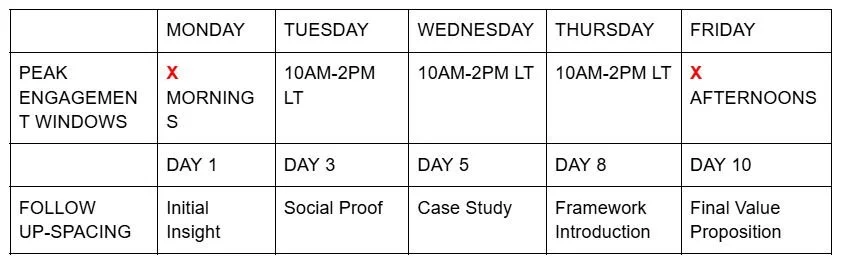
Curiosity Gaps: Creating information asymmetry that drives 31% higher response rates.
Status Triggers: Positioning that appeals to professional identity.
Social Proof: Industry-specific success stories timed with engagement signals.
REAL-WORLD IMPACT
Let's look at what this means in practice. A recent analysis of 100,000+ outbound sequences revealed:
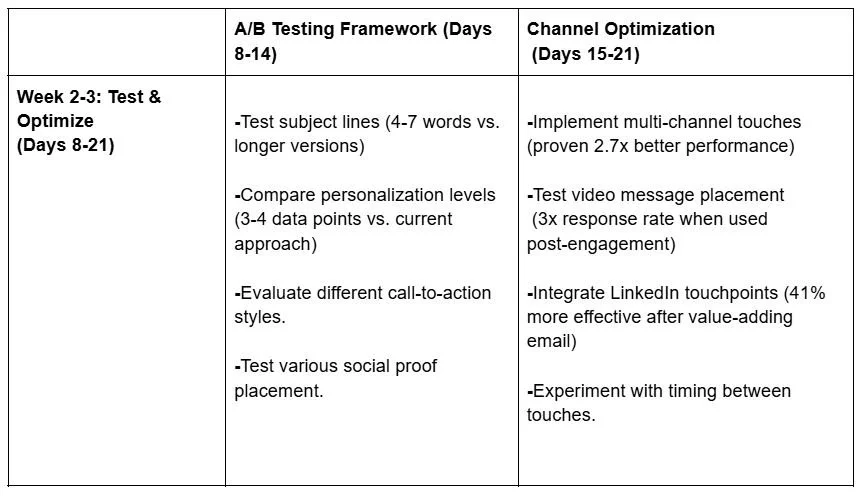
Multi-channel sequences perform 2.7x better than email-only.
Video messages get 3x more responses when used after initial engagement.
LinkedIn touchpoints are 41% more effective when following a value-adding email.
THE IMPLEMENTATION ROADMAP
Ready to transform your sequences? Start here:
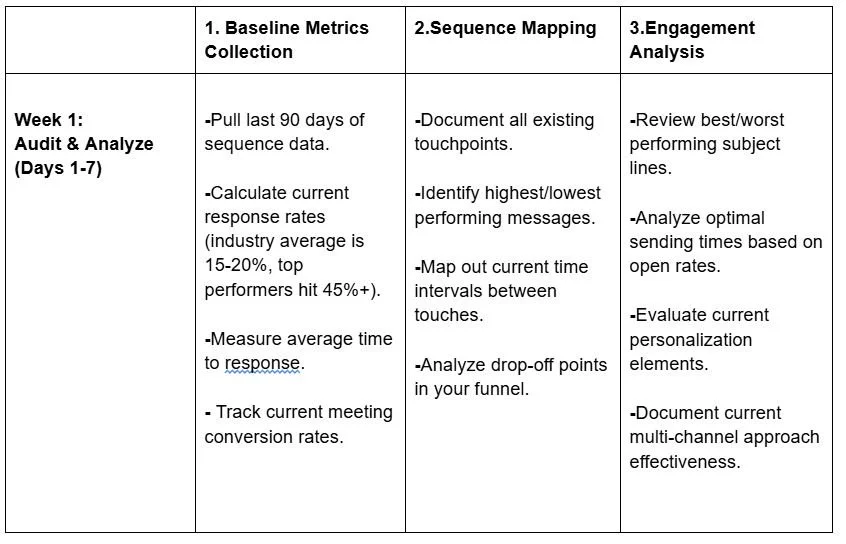
Audit Current Performance
Track response rates by message type.
Map engagement patterns.
Identify drop-off points.
Build Your Testing Framework
Start with your control sequence.
Test one variable at a time.
Measure against clear metrics.
Optimize and Scale
Double down on what works.
Remove underperforming elements.
Continuously gather data.

Implementation Framework: Your 30-Day Transformation Plan
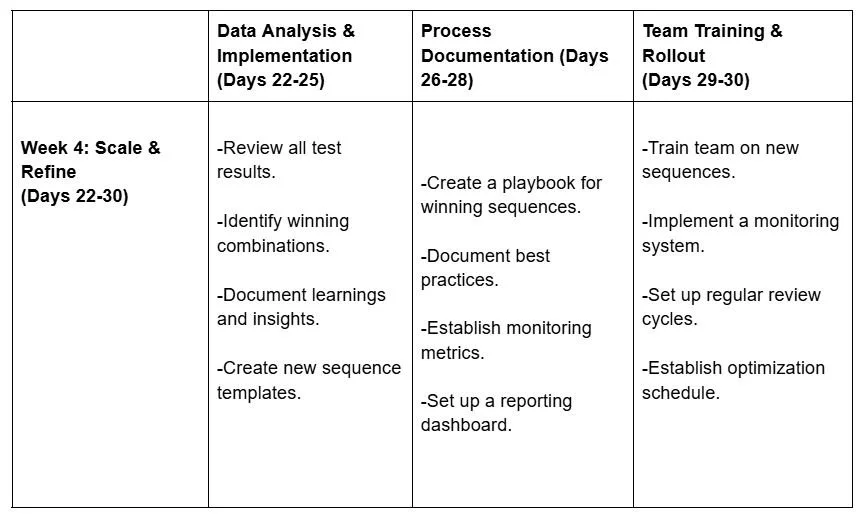
Pro Tips for Implementation:
Start with a small test group (10-15% of your total prospects).
Only change one variable at a time.
Run tests for at least 5 business days.
Document everything, including failed tests.
Use control groups for accurate comparison.
Now you have the templates, apply them and start achieving results. Every market, every team, and every customer base is different. Test, measure, and refine until you find your winning formula
Key Takeaway: The highest-performing sequences aren't just well-written – they're well-timed, well-measured, and constantly optimized based on real data.
The human touch matters, sure, we could talk about open rates and click-through metrics (and yes, we track those), but at the end of the day, it's about connecting human to human. Your prospect isn't a number in a spreadsheet - they're probably someone reading your message while juggling three other tasks and sipping their second coffee of the day.